
Airbus H145
A compact twin-engine helicopter whose BK117 and EC145 lineage evolved into a versatile rescue, policing and transport aircraft.
For information on this aircraft, please click here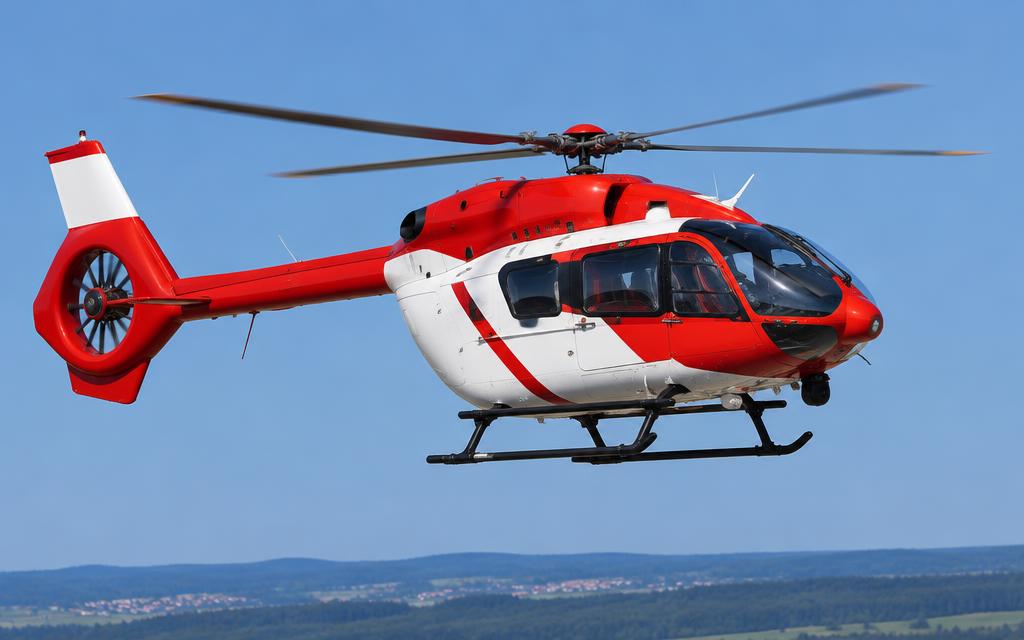
- Manufacturer
- Airbus Helicopters
- Lineage
- BK117 / EC145
- H145 introduction
- 2014
- Role
- Light twin-engine helicopter
From BK117 to EC145
The H145 traces its origins through the BK117 and EC145 helicopter family. This lineage matters: the modern H145 was not an unrelated clean-sheet helicopter. Successive updates retained the practical cabin and twin-engine concept while improving systems and mission capability.
The EC145 T2 development first flew in July 2010 and entered service in 2014. It became known as the H145 under Airbus Helicopters’ naming system. The aircraft introduced an enclosed Fenestron tail rotor and updated engines and avionics compared with earlier EC145 versions.
Mission-focused design
A compact footprint, skid landing gear and useful cabin make the H145 suitable for operations away from large airports. Twin engines are valuable for missions where reliability and performance margins matter. Rear cabin access and adaptable interiors allow operators to fit medical equipment, seats or specialised mission systems.
Air ambulance services use the aircraft to move medical crews and patients; police units use it for observation and support. Other configurations serve passenger transport, utility work and military requirements. The H145M is the military version, with mission equipment that varies by operator.
The five-bladed update
Airbus introduced the updated five-bladed H145 in 2020. The new rotor system improved useful load and ride characteristics while simplifying maintenance. Earlier H145s used a four-bladed main rotor, so both arrangements belong to the aircraft’s development story.
Service and legacy
The H145’s history is one of continuing refinement around a versatile light-twin platform. Its role is often visible close to communities, particularly in emergency medical work, rather than only at commercial airports. Active upgrades and mission configurations mean its service history continues to grow.
What to look for
Look for a compact twin-engine cabin, skid landing gear and the enclosed Fenestron tail rotor. Count main-rotor blades when safely possible: modern H145s may have four or five. Earlier EC145-family aircraft without a Fenestron should not automatically be identified as H145s.