
Boeing 737-800
The Boeing 737-800 became one of the defining short- and medium-haul airliners of the Next Generation 737 family.
For information on this aircraft, please click here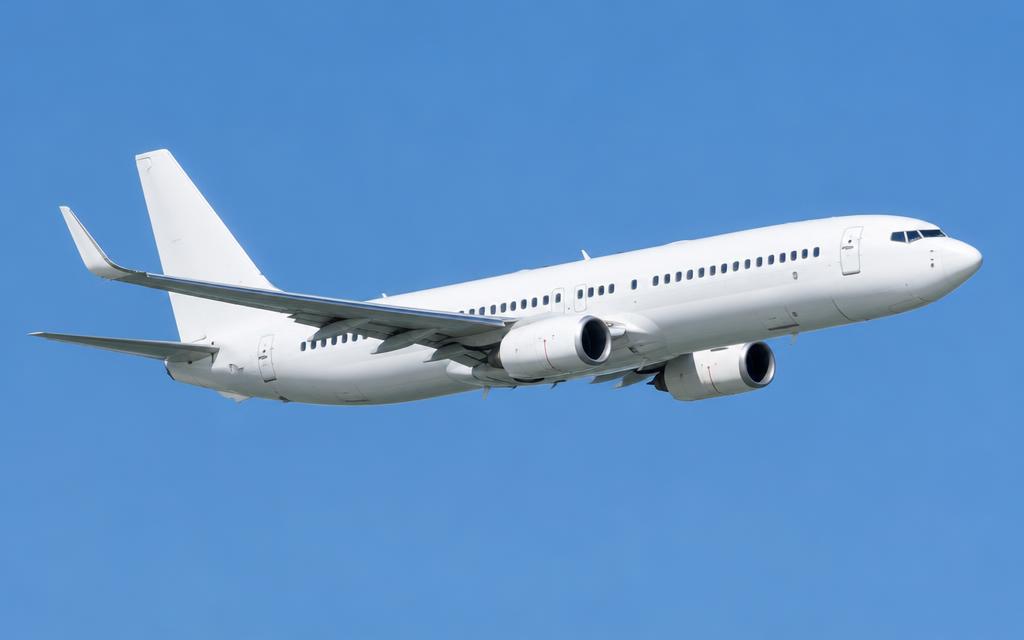
- Manufacturer
- Boeing
- Generation
- 737 Next Generation (NG)
- Engines
- CFM56-7B
- Role
- Passenger airliner / converted freighter
The Next Generation redesign
Boeing developed the 737 Next Generation family in the 1990s to update the established 737 line. The NG aircraft introduced a redesigned wing, new CFM56-7B engines and updated systems. The 737-800 offered a longer fuselage than the -700, giving airlines more seats while retaining the general operating flexibility of a narrow-body jet.
The -800 entered airline service in the late 1990s and became a mainstay of scheduled and holiday flying. It belongs to the NG generation and must not be confused with the later 737 MAX 8, even though the names and general proportions can look similar.
Design and variants
The 737-800’s underwing engines, low fuselage and familiar 737 nose connect it visually with earlier generations. Winglets were fitted to many aircraft, with blended and split-scimitar designs appearing in service. Cabin configurations vary by airline; high-density layouts can accommodate up to 189 passengers.
The NG family also includes the -600, -700 and -900 series, which differ in size and operating characteristics. A 737-800 is therefore one member of a broader design family rather than a label for every winglet-equipped 737.
An airline workhorse
Airlines used the -800 on a wide variety of domestic and international routes. Its capacity suited both low-cost carriers and network airlines, making it a frequent visitor at airports around the world. The type’s long production and widespread adoption supported a substantial pool of trained crews, maintenance experience and spare parts.
Cargo conversions and legacy
As passenger aircraft aged or operators renewed fleets, some 737-800s gained a second career as freighters. The Boeing Converted Freighter programme adds cargo-handling capability and a main-deck freight door to former passenger aircraft. These conversions show how an airliner’s usefulness can continue beyond its original passenger role.
The 737-800’s legacy is its scale and versatility: a familiar medium-capacity jet that served airlines with many different business models. It remains distinct from both the older 737 Classic generation and the newer MAX family.
What to look for
Check the pointed 737 nose, underwing engines and fuselage length. Many -800s have blended or split-scimitar winglets, but some do not. The 737 MAX has different engine nacelles and other details; registration lookup is useful when an exact variant is uncertain.
Spotter's visual guide · Boeing 737 Next Generation
How to recognise it
- Flat-bottomed 'hamster' engine inlets
- Short gear: the aircraft sits low to the ground
- Blended or split-scimitar winglets
- Tail cone ends in a tapered point with the APU exhaust
Often confused with
737 MAX 8 — the MAX has scalloped engine nacelles and a split tail cone.
Where you'll see it
Ryanair · TUI · Southwest · KLM
Variants
737-700 · 737-800 · 737-900ER · 737-800BCF freighter