Airbus A320neo
The A320neo modernised Airbus’s established single-aisle family with new engines and aerodynamic improvements rather than an entirely new airframe.
For information on this aircraft, please click here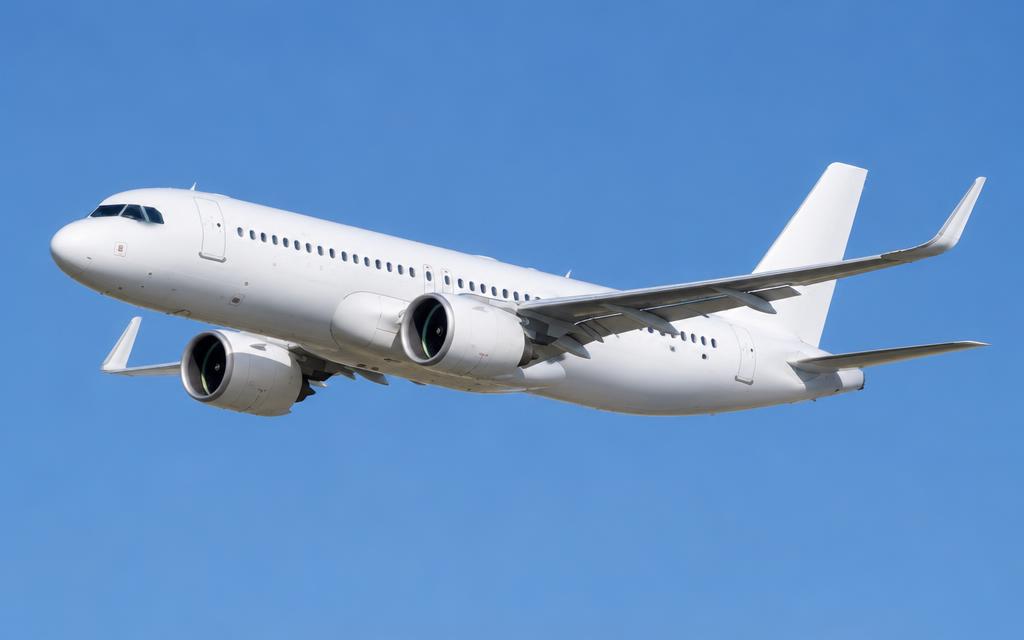
- Manufacturer
- Airbus
- First neo flight
- 25 September 2014
- First delivery
- 20 January 2016
- Launch operator
- Lufthansa
Origins in the A320 family
The original A320 introduced digital fly-by-wire controls to Airbus’s single-aisle passenger aircraft in the 1980s. The neo, meaning ‘new engine option’, was developed decades later to improve fuel efficiency and noise performance while retaining the basic aircraft family. Airbus launched the programme in 2010 as airlines sought lower operating costs on heavily used short- and medium-haul routes.
Engines, testing and introduction
Airlines could choose between the Pratt & Whitney PW1100G-JM geared turbofan and CFM International LEAP-1A. Along with Sharklet wingtip devices, these engines were central to the efficiency improvements. The prototype A320neo first flew on 25 September 2014, beginning the flight-test programme for the updated aircraft.
Lufthansa received the first A320neo on 20 January 2016 and began scheduled service that month. Different engine versions went through their own certification and introduction programmes. The neo designation therefore describes a family of engine and airframe configurations, not a single identical aircraft specification.
Variants and airline service
The neo family includes the smaller A319neo, the A320neo and the longer A321neo. The A321’s later LR and XLR developments extended the family into longer-range operations, but these are distinct from the A320neo itself. Common flight-deck principles helped airlines integrate the new aircraft alongside earlier A320-family fleets.
The A320neo’s main role is scheduled passenger flying between cities where a wide-body aircraft is unnecessary. Its story demonstrates how replacing engines and refining aerodynamics can extend a successful aircraft platform without starting again from a clean sheet.
Legacy and continued development
The programme became a central part of Airbus’s narrow-body offering, sustaining the A320 family through successive changes in airline demand. Cabin layouts, engine upgrades and maintenance improvements continued to evolve after introduction. Like other active airliners, its service history is ongoing rather than complete.
What to look for
Look for an A320-family fuselage, two large underwing engines and usually tall Sharklet wingtips. Sharklets alone do not prove an aircraft is a neo: earlier A320s can have them too. Engine shape and registration records are more reliable clues.
Spotter's visual guide · Airbus A320neo family
How to recognise it
- Large-diameter engines that sit lower under the wing
- LEAP-1A nacelles have a scalloped rear edge; PW1100G are fat and round
- Sharklets on every neo
- Two over-wing exits each side
Often confused with
A320ceo with Sharklets — check engine size; the neo's fan is clearly bigger.
Where you'll see it
easyJet · Wizz Air · IndiGo · Lufthansa
Variants
A320neo LEAP-1A · A320neo PW1100G